 Morning trip
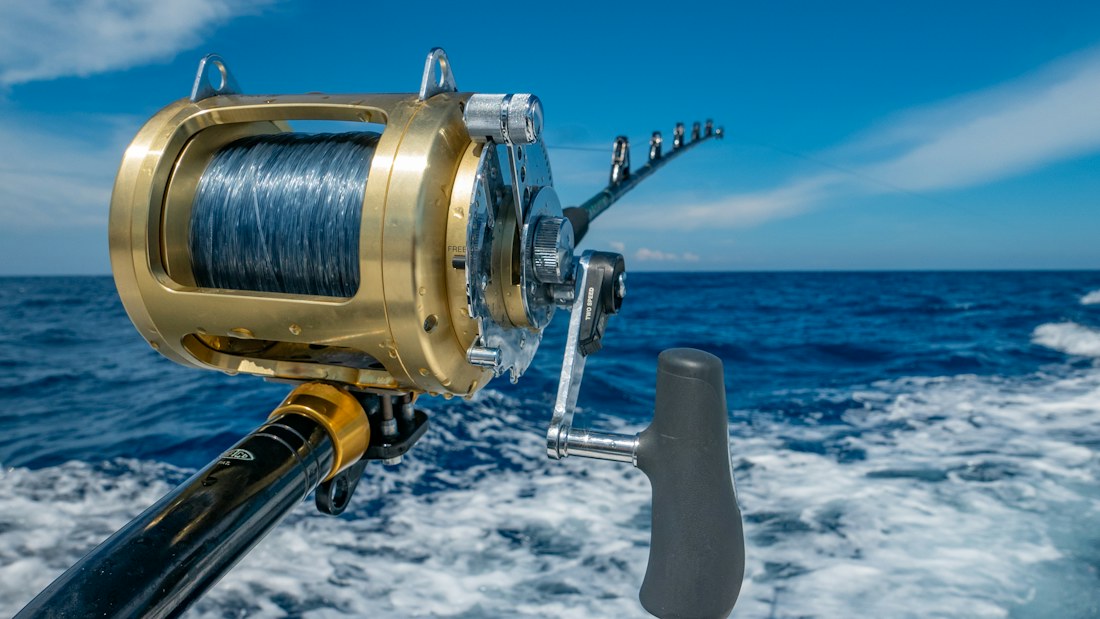
Morning deep sea fishing
Get an early start on the reef and leave the afternoon free to explore Miami.
Miami, Florida
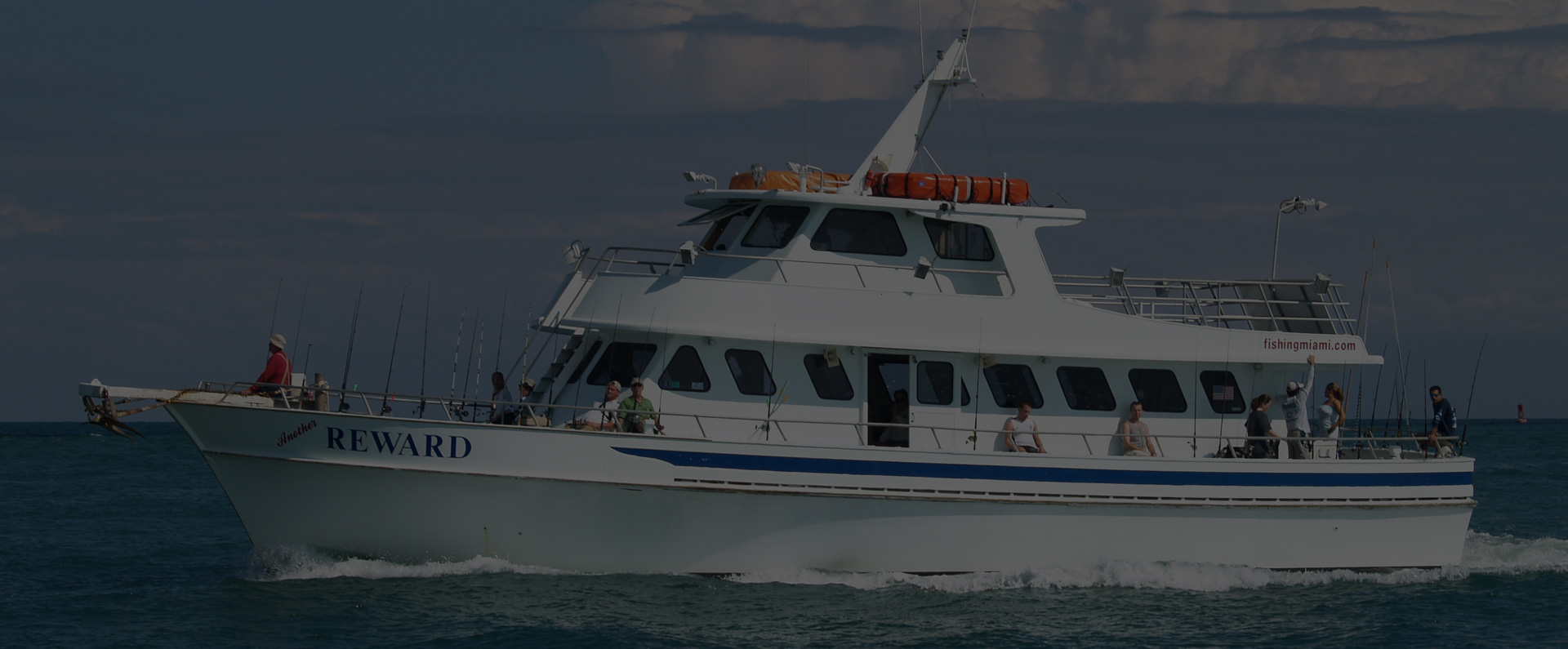
Grab a rod and head offshore with the Reward Fleet. Spend a half day fishing the Atlantic reefs off Miami with bait, tackle, and your fishing license included.
Another Reward · Miami, FL
Fishing trips
Choose a date in the booking calendar to see which departures have seats available.
Morning tripGet an early start on the reef and leave the afternoon free to explore Miami.
 Afternoon trip
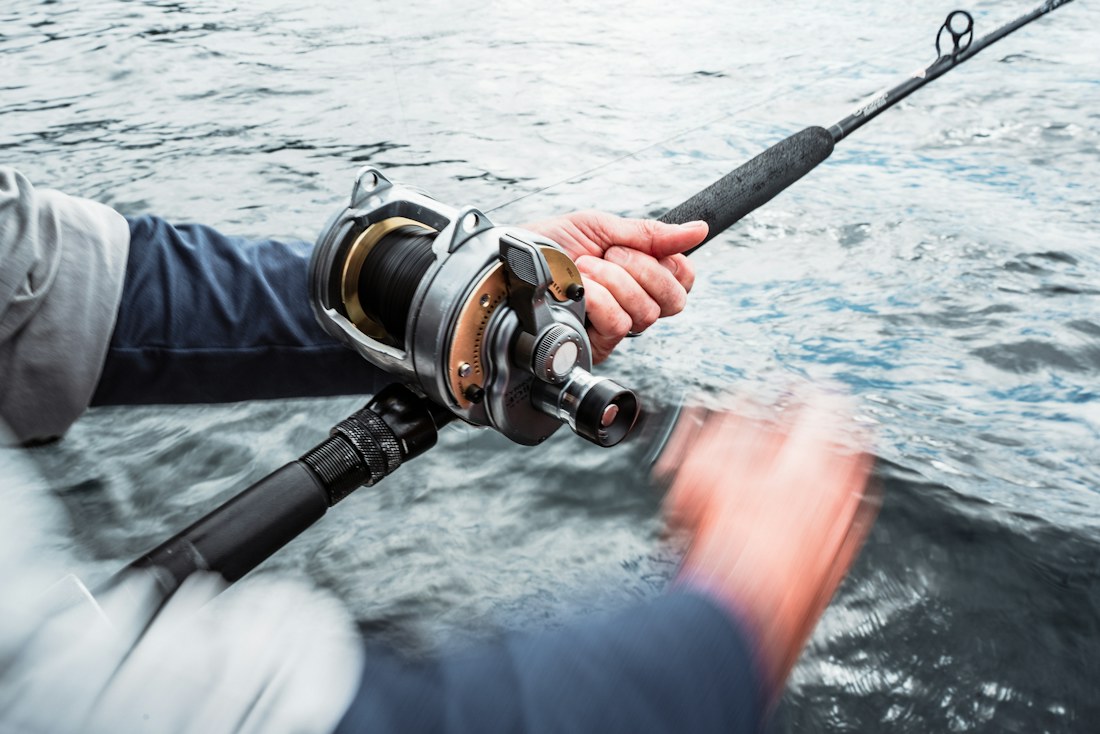
Keep the morning open, then join the crew for an afternoon fishing offshore.
Night tripHead offshore after dark with the Reward Fleet for an evening of fishing off Miami.
| Departure (Miami time) | Days offered |
|---|---|
| Daily | |
| Thursday through Sunday | |
| Thursday through Saturday |
Trip planner
Choose a fishing date to compare offshore waves, check the tides at Government Cut, and find sunset in Miami. All times are local.
Atlantic Ocean · East of Government Cut
Check the National Weather Service wave forecast for your fishing date.
Prone to seasickness? Compare the height and the seconds between waves. At the same height, closely spaced waves can feel choppier than a longer swell. Forecast heights average the highest third of waves. Individual waves can be taller.
NWS point forecast · Coastal forecast & advisories
Forecast point 25.76°N, 80.04°W. Conditions vary along the boat’s route.
Miami, Florida
Estimated local sunset
Miami Beach · Government Cut
Predicted high and low tides for your date.
Change dateNOAA station 8723178 · Heights in feet relative to mean lower low water.
Miami offshore field guide
What did you catch off Miami? Browse 16 fish, or narrow the list by body shape and visible features.
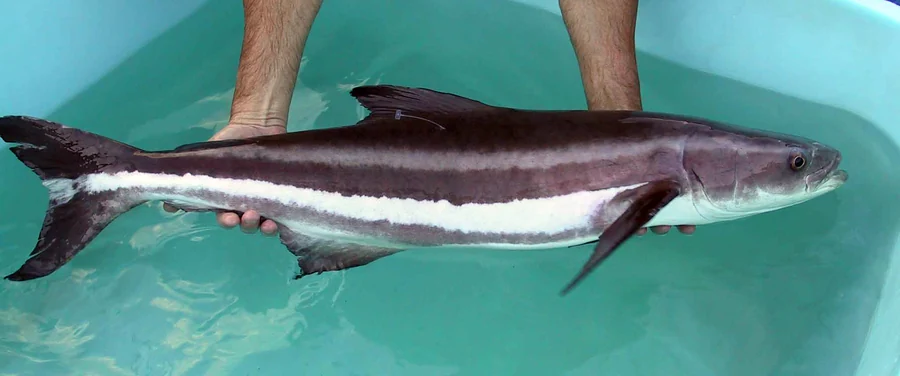
Look for a broad, flattened head on a long brown body. A dark band runs from the eye toward the tail, above a pale belly. The lower jaw sticks out slightly beyond the upper jaw.
View Florida species guide Photo · Jorge Alarcon or Daniel Benetti, NOAA Photo Library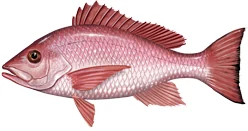
Start with the eye and snout. A red snapper has a red eye and a long triangular snout. Its rosy sides fade toward a pale belly. Adults usually have an unspotted flank.
View Florida species guide Illustration · NOAA FishWatch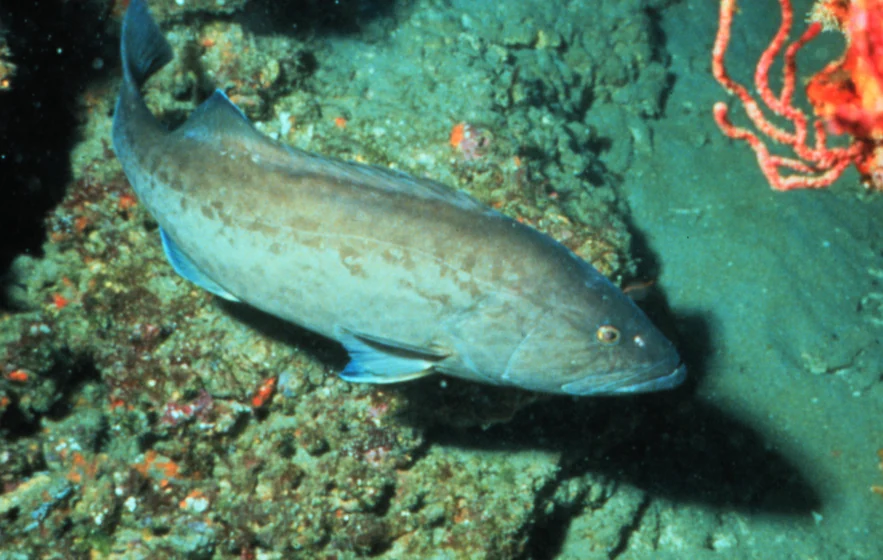
Look for a large mouth and dark, worm-shaped blotches scattered across gray-brown sides. Thin lines fan outward from the eyes. The tail and the lower rear fin can have pale edges.
View Florida species guide Photo · T. Potts, NOAA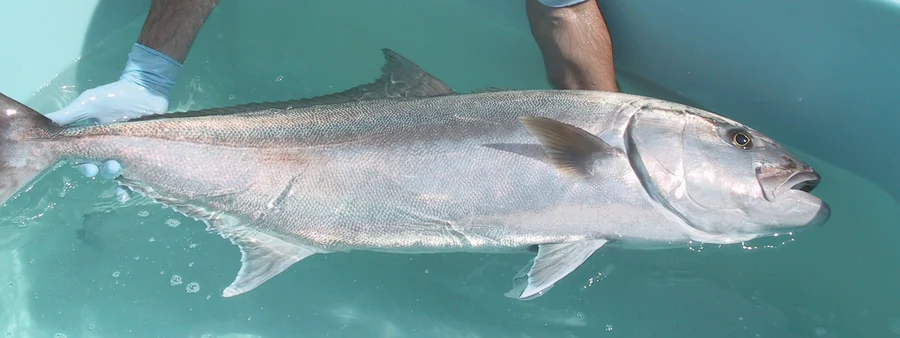
Follow the dark bar on the head. It angles from the snout through the eye toward the first back fin. The sides can have an amber sheen, and the narrow section ahead of the tail lacks the row of bony plates seen on a blue runner.
View Florida species guide Photo · Jorge Alarcon or Daniel Benetti, NOAA Photo Library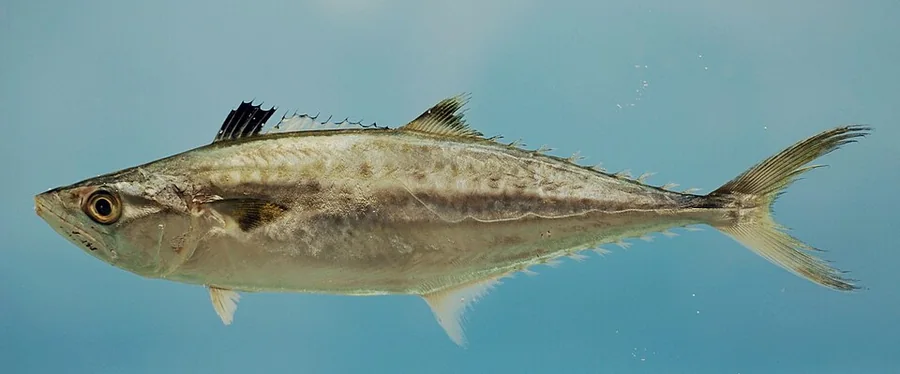
Trace the fine line along the silver flank. It takes a sharp dip below the second back fin. Young kings can have gold spots like Spanish mackerel, so check the line and the unmarked front edge of the first back fin.
View Florida species guide Photo · NOAA Fisheries, SEFSC Pascagoula Laboratory, Brandi Noble collection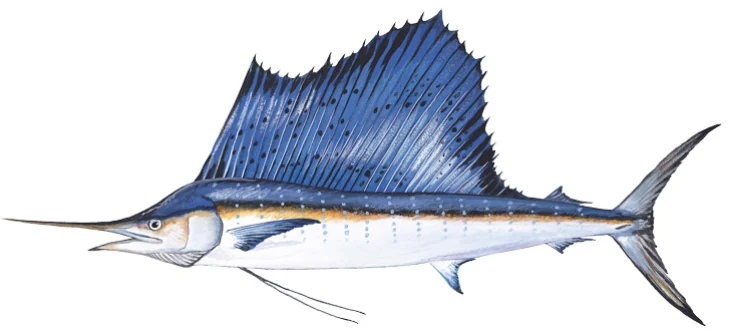
Look for the spear-like bill and the tall, spotted sail along the back. The sail can fold flat against the body. When raised, it stands tallest near the middle.
View Florida species guide Illustration · Duane Raver, U.S. Fish and Wildlife Service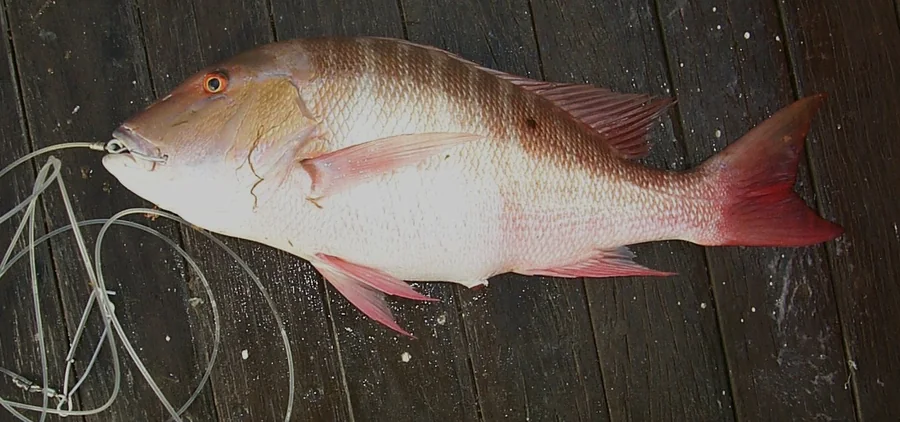
Look for a dark spot high on the flank and a thin blue stripe curving below the eye. A lane snapper can also have a spot. On a mutton snapper, the lower fin just ahead of the tail comes to a point.
View Florida species guide Photo · NOAA Photo Library, SEFSC Pascagoula Laboratory, Brandi Noble collection · CC BY 2.0 · cropped and resized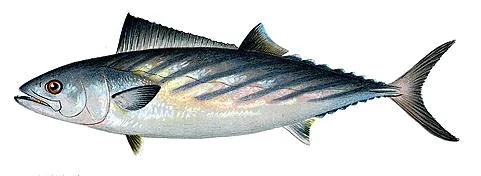
Look for straight, dark stripes slanting across the upper back and a plain belly. A little tunny has wavier back markings and a cluster of dark spots below its side fin.
View Florida species guide Illustration · Sherman Foote Denton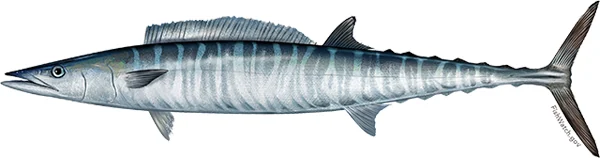
Blue bars run vertically down the silver sides of this long, narrow fish. Look for a pointed snout and a long, low first back fin. The upright bars help distinguish a wahoo from a king mackerel.
View Florida species guide Illustration · NOAA FishWatch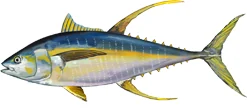
Look for bright yellow finlets just ahead of the tail. On larger fish, the second back fin and the fin opposite it extend into long yellow sickles. Blackfin tuna have short fins there and dark finlets with pale edges.
View Florida species guide Illustration · NOAA FishWatch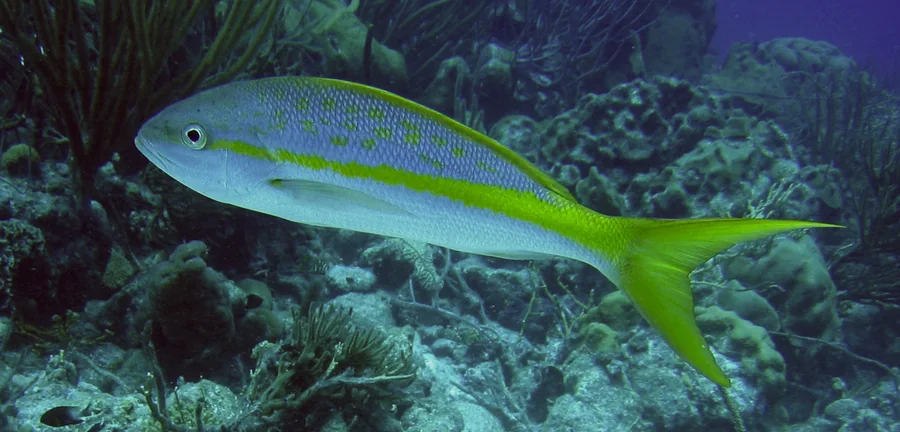
Follow the yellow stripe from the mouth to the tail. It widens near the tail and runs straight into the deep yellow fork. Small yellow spots scatter across the back.
View Florida species guide Photo · Transity · CC BY-SA 3.0 · cropped and resized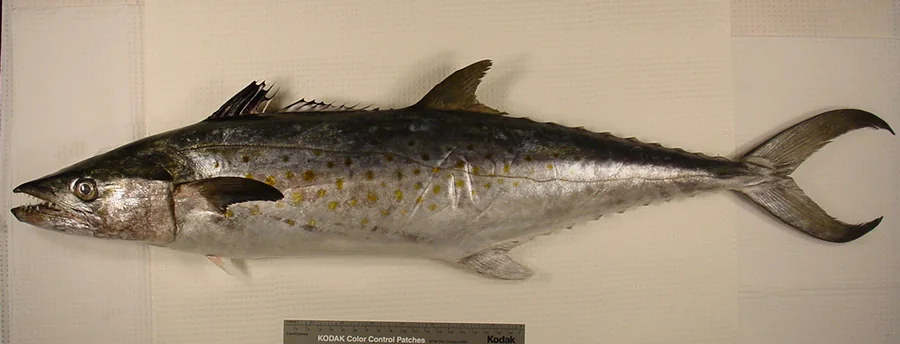
Gold spots dot the silver sides. Look for a dark patch at the front of the first back fin. The fine line along the flank slopes gently toward the tail. A sharp dip is a clue to a young king mackerel.
View Florida species guide Photo · J. Deeds, U.S. Food and Drug Administration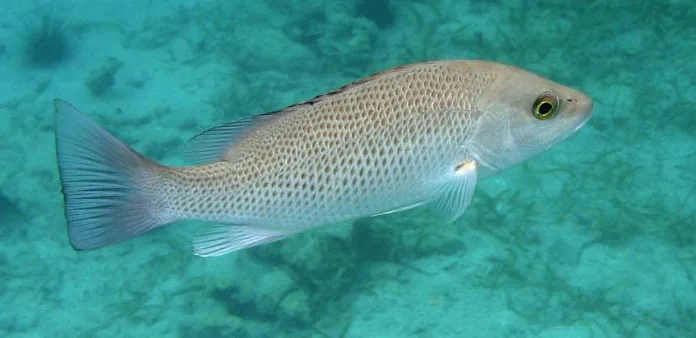
Look for reddish flecks arranged in rows on a gray or brown body. The dorsal fin has a dark or reddish edge. Young fish can have a dark band running from the snout through the eye.
View Florida species guide Photo · Clinton & Charles Robertson · CC BY 2.0 · cropped and resized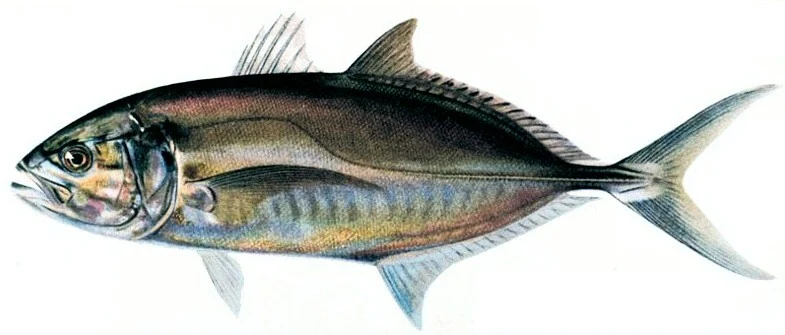
Check the gill cover for a small dark spot, then look at the black tips of the forked tail. A row of raised, bony plates runs along each side just ahead of the tail.
View Florida species guide Illustration · U.S. Fish Commission, via NOAA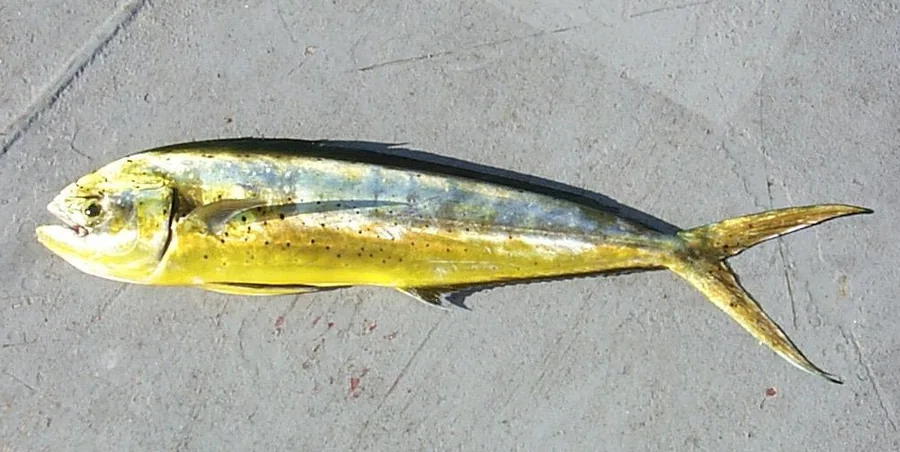
Look for a blue-green back, yellow flanks and one long back fin stretching from above the eye almost to the tail. Adult males have a blunt, upright forehead. Females have a more sloping profile.
View Florida species guide Photo · Brandi Noble, NOAA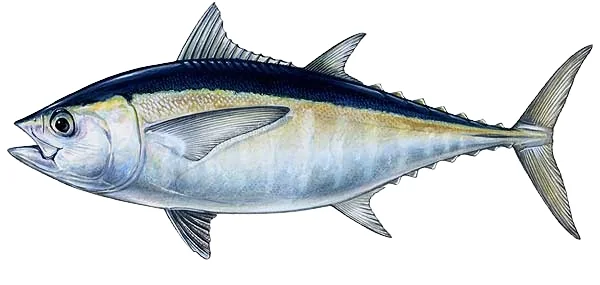
A bronze band runs along the flank. Check the tiny fins just ahead of the tail. On a blackfin they are dark with pale edges. The long side fin reaches almost to the base of the second back fin.
View Florida species guide Illustration · Duane Raver Jr.Set either filter to “Any” to see more fish. If you’re on board, ask the crew to take a look at your catch.
Explore the Reward Fleet’s local catches and Florida Fish and Wildlife’s species profiles.
Boarding details
Use the boarding address in your reservation confirmation. Call us if you need directions to your dock.
Your rod, reel, bait, tackle, and fishing license are included. The crew can help you get started at the rail.
Yes. Let the crew know it’s your first trip. They can help you bait your hook, drop your line, and use the reel.
Open the reservation calendar, choose your party size and date, then select an available departure. You can also call (786) 399-0145.


